I have produced a short video that introduces StratoSolar as a possible solution to the looming CO2 climate crunch. Awareness of the problem is growing and some action is occurring, particularly in China. However, action on a scale necessary to solve the problem is not occurring, and as the video explains is very unlikely to occur with today’s technologies or politics.
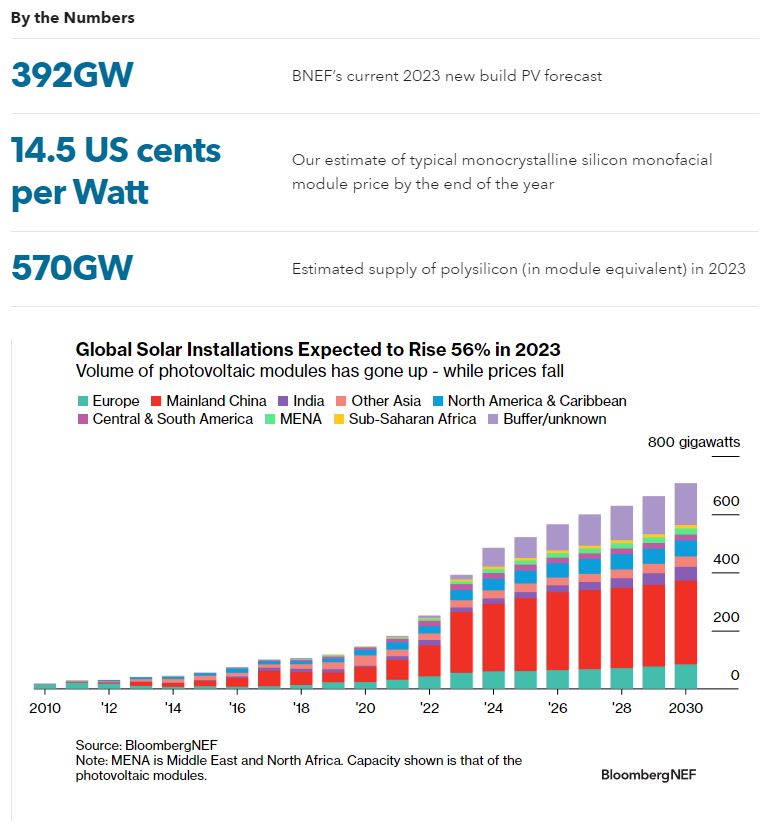
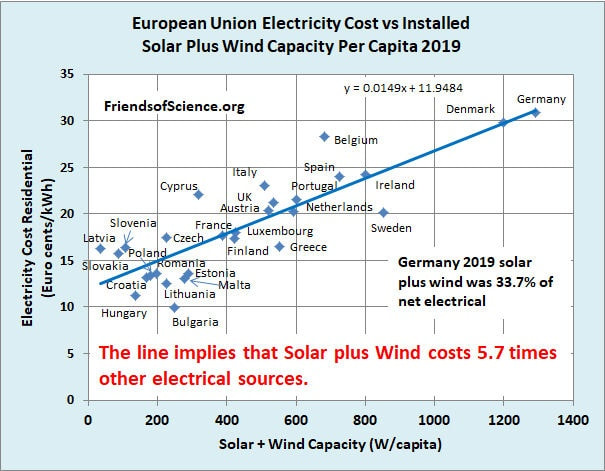
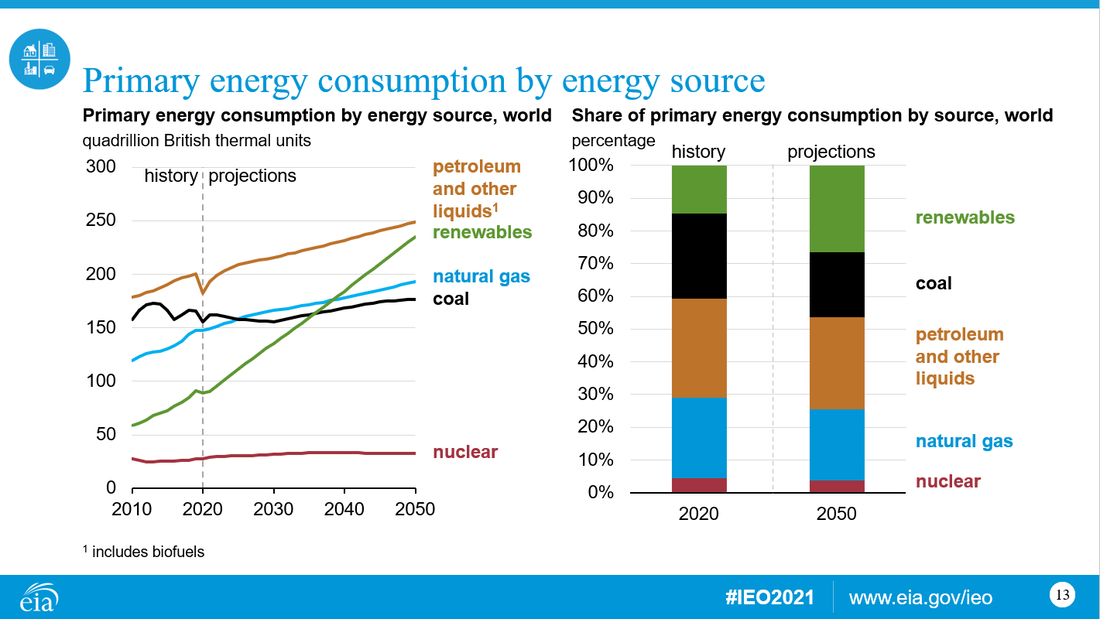
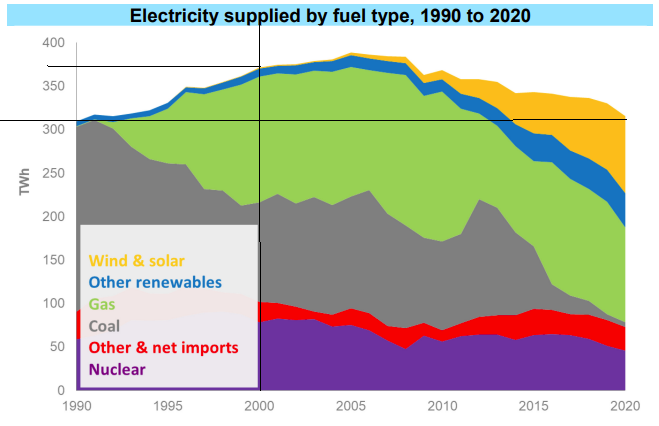
World energy use is rising with GDP growth, mostly in China and other rapidly developing economies. Most of this energy comes from burning fossil fuels. There is a well agreed political goal to try to limit CO2 to 450ppm to limit the risks of climate change. Today the OECD consumes a little more than half of world energy (71,480TWh). By 2050, OECD countries are projected to consume little more than today (92,380TWh), but non OECD countries are projected to consume more than twice as much as OECD countries (198,526TWh). Most of this growth in energy consumption will be driven by economic growth in non OECD countries. Most of this energy will come from burning fossil fuels. Non fossil fuel energy supply, particularly wind and solar is projected to grow substantially from (21,392TWh) today to (70,703TWh) by 2050, but will only account for about 25% of all energy in 2050. The problem is the higher cost of alternative energy competes with economic growth. If you are poor, economic growth is far more important. The only rational solution to this conundrum is to find a source of alternative energy that is cheaper than fossil fuel energy. This allows economic growth while reducing CO2. The fundamentals driving these IEA projections are economic. Alternative energy from wind and solar is not market competitive, nor expected to be for the foreseeable future, so its market size is driven by the scale of government subsidies and taxes. Because of competing national objectives, world agreement is not possible, so alternative energy grows based on political will in individual nations. This will, as with all things political is very fickle. The IEA projections assume that fossil energy supply will grow to meet demand, and CO2 reduction will remain a low priority. The known supplies of coal and gas will likely meet projected demand. Oil is more problematic. Oil demand already regularly exceeds supply and given economic growth, fuel efficiency will have to improve at a rapid rate to keep supply and demand in balance. Looking objectively at these numbers a few things are pretty apparent. 1) Long before 2050 the world will face a CO2 crunch 2) An oil crunch driven by demand constantly exceeding supply is highly likely. 3) What OECD countries do will hardly matter. The non OECD countries will be the major CO2 emitters and oil consumers. These oil and CO2 crunches are big sources of potential conflict. The oil crunch will increase the cost of oil. This will reduce economic growth. As the CO2 affects become more obvious and more difficult to deny, the demarcation line will be more between OECD and non OECD countries, rather than within OECD countries as at present. As stated earlier , the only rational way to avoid these looming conflicts is to find a CO2 free energy source that is cheaper than fossil fuels. This removes clean energy as an impediment to economic growth. Instead it has the opposite effect. It enhances economic growth. This is the point where as usual I plug StratoSolar as a clean and cheap energy source that meets all the requirements. The previous two posts cover the scale of a StratoSolar solution that attempts to meet the 450ppm/2C CO2 reduction goals. They show a ten year ramp in TW/y production to a point where each years TW/y production is 3% of total energy demand. Production growth then slows to meet the yearly growth in energy demand. The graph above displays this information in a neutral format. This is still based on the projections from sources like the EIA mentioned for the previous posts. These all project significant growth for carbon neutral energy sources (shown in green) to about four times current levels. Most growth comes from wind and then solar after 2025 as it becomes more economically competitive. However the growth in the overall energy demand leads to significant growth in fossil energy supply, primarily coal. The red plus purple area shows this. The purple shows the amount of energy from fossil fuels that needs to be displaced to meet the 450ppm goal. This is around 200,000TWh of yearly energy or 22TW of average generation capacity. The previous posts show how this can be accomplished with StratoSolar and how much harder it is with ground PV. The purple represents the market opportunity for cost competitive clean energy, or alternatively the scale of the tax and subsidy regime necessary to support uncompetitive green energy . This shows that even fast and aggressive solutions need about 40 years. The window of opportunity for any practical solution is very narrow. Current trends will raise CO2 to levels associated with a 20C planet. This graph shows the yearly capital cost of ramping wind, solar, nuclear and StratoSolar over ten years to 3% of energy demand and then maintaining 3%/y. These assume PV $/W prices follow a 20% learning curve from a $2/W starting point. This applies to ground PV at 12% utilization and StratoSolar PV at 36% utilization. We optimistically assume wind will follow an 8% learning curve and starts at $2/W and 30% utilization. We don’t apply a learning curve to nuclear but give it a $3/W cost and an 80% utilization, both of which are optimistic. This shows that wind and nuclear will exceed $3T/y, ground PV will overtake wind and approach $1.5T/y, and StratoSolar is around $0.5T/y. This only covers electricity generation costs. Converting to an electricity economy will require more transmission and distribution, and a synthetic fuels infrastructure as well. This will ultimately be an additional several $T/y. As well as consuming the large financial resources just described, all carbon neutral energy sources have huge and permanent land use impact. The scale is hard to imagine. If wind were the sole energy provider it would impact over 600,000km2 each year. That’s one Texas, or several European countries or Japans every year. Nuclear exclusion zones would be similar in area. For nuclear we would need to build nearly 1000 GW reactors each year. For comparison today total world nuclear is around 350GW. Ground PV needs 100,000km2/y, but excludes all other use. For most developed countries there is simply not enough land. There is a beginning of an attempt to map out scenarios where today’s wind, solar and bio are capable of solving the 450ppm problem. However none address the whole problem in any realistic fashion. The problem with “all of the above” solutions is that it is possible to keep adding more elements to the solution, regardless of their practicality or economic impact. Common strategies are to reduce the projected energy demand using hypothetical efficiency gains, storage technologies or belt tightening morality. Other strategies only solve a part of the problem, like electricity, or ignore the land limit by expanding the supply of land to include unrealistic far away areas like the Sahara desert or mountains. StratoSolar-PV is economically viable, scales to the local energy demand regardless of geography, and has the least impact on land use and the environment. What’s not to like? A simple question is why can’t ground PV do the same thing as the StratoSolar scenario? The simple answer is it is too expensive and it won’t get cheap enough anytime soon. The sharp drop in PV prices over the last few years have stopped, and there is no rational basis for them to fall further for a long time. A good thing about the recent price drops is it has raised awareness of PV and its potential for further improvement. A bad thing is it has created over optimistic and unrealistic assessments of PV’s chance to be a significant energy provider in the short term. In the end, energy is all about politics and economics. StratoSolar PV panels have an average utilization of 40%. Ground PV panels have an average utilization of about 13%. Based on a simple analysis, ground PV electricity costs three times as much, and importantly this is significantly more than electricity costs today. That means that it can only be sold with the help of subsidies. As Germany has demonstrated, profitability drives investment. By providing subsidies that guaranteed profitable investment, German private industry jumped at the opportunity and installations grew very rapidly. Japan and China are following Germany’s lead. But things are actually worse than this. Its always tempting measure solar with the best utilization from sunny places, but unfortunately with solar its all about geography. There are very few places with good solar near population centers. Southern California is a rare example. Take Germany as a more representative example. PV utilization in Germany is around 11% from the published data. Germany could do a deal with a sunny location and build HV transmission lines to transport the power. This has numerous problems. On purely money terms, as panels have reduced in cost, and transmission lines have not, its likely that the better PV utilization in the desert will not cover the HV transmission costs. Don’t forget that the transmission lines will have the low PV utilization, which more than doubles the cost compared to conventional HV transmission lines. On top of this are the political constraints. HV transmission lines are not liked, and the countries where the panels and HV transmission lines are placed may not be the most politically stable. Even in the US, politics and economics will favor New York, for example, building in New York rather than dealing with getting power from New Mexico via transmission lines through many states. What this means is that ground PV discriminates, and northern climes get to pay twice as much, or more for electricity. Economics will also dictate that southern climes will get most of the synthetic fuel business. Because of the lower utilization, ground PV electricity will always cost 3X StratoSolar electricity. This factor makes StratoSolar economic for electricity, and then fuels long before ground PV. The learning curve is good but not that good. The learning curve will not continue for ever, and when it slows it will create a permanent cost barrier that ground PV will never overcome. StratoSolar is far less variable with geography, so Germany or New York, for example could provide all their energy needs, both electricity and fuel, locally. So to summarize, ground PV is too far from viability today, and too variable with geography to ever be an easy political choice. StratoSolar is viable today, and does not discriminate against geography. The StratoSolar capital investment for both PV plants and synthetic fuel plants will average a sustainable $0.6T/year, in line with current world energy investment. $2T/year capital investment for ground PV is a lot harder to imagine. The following describes a StratoSolar deployment. The key point this illustrates is the simplicity. This is not an "all of the above strategy" with lots of moving parts and government interventions to subsidize or tax various market participants. The impact on land and existing infrastructure is indirect, and not an impediment to deployment. China in particular could adopt this strategy and replace coal without penalizing GDP growth. This shows that meeting the 450ppm CO2 goal in a realistic time frame with a realistic cost is feasible. Ground PV is still too expensive and will always be a factor of two to three behind in cost. The political costs and delays of land use and grid upgrades will further limit the scope and time frames of what is achievable. The key enabler is economic viability without subsidy. StratoSolar deployment sequence: Step 1) Deploy StratoSolar initially at $1.50/Wp, $0.06/kWh. This is profitable in most markets and volume growth is not constrained by amount or availability of subsidy. Step 2) After about 25GWp of cumulative production, StratoSolar initial learning curve takes costs down to $1.00/Wp, $0.04/kWh. Step 3) Start deploying electrolysers costing $0.50/W making hydrogen for $3.00/kg. This provides fuel for nighttime and winter electricity generation for $0.08/kWh and starts an electrolyser learning curve that will reduce the $/W electlolyser cost. Step 4) Continue deploying StratoSolar to 1TWP cumulative capacity. Costs reduce to $0.50/Wp, $0.02/kWh. Electrolysers reduce to $0.20/W, Hydrogen reduces to $1.25/kg, nighttime electricity reduces to $0.04/kWh. Step 5) Start liquid fuel synthesis using hydrogen and CO2. Synthetic gasoline costs $3.00/gallon. This starts a learning curve for fuel synthesis plants. Step 6) By the 10TWp cumulative deployment point costs are down to $0.25/Wp, $0.01/kWh, $0.60/kg for Hydrogen, and synthetic gasoline costs $1.00/gallon. This does not discuss time frames. These will depend on time to acceptance. The cumulative TWp needed to replace all world energy demand projected for 2045 is around 80TWp. The two time alligned graphs below illustrate a yearly StratoSolar goal of replacing 3% of world energy demand. Yearly StratoSolar production would need to ramp fairly quickly to 1.5TWp by 2020 and then increase slowly to about 2.5TWp by 2045 to meet increasing world energy demand. 3% is pretty aggressive, but not excessive and aligns with a 30 year plant life. Yearly world investment never exceeds $1T/y, as costs fall with cumulative installed capacity. For reference current world energy is about 8% of GDP, or about $6T/y. The 3%/year replacement scenario shown in the graph replaces about 80% of world energy with StratoSolar by 2050 with the remaining energy coming from the current projections for nuclear, hydro and other renewables. The CO2 emissions reduction chart below shows the CO2 reduction associated with this StratoSolar deployment scenario. We show a simple sequence with coal being replaced first, then oil, and finally gas. The reality would be along these lines but with less distinct transitions. Coal is the obvious first target as the biggest and dirtiest emitter and the easiest to replace with electricity. Oil is next as its high cost make it the easiest to replace with cost competitive synthetic fuels. Natural gas is last because it is the logical partner to solar, it’s the cleanest, and its low cost keeps it cost competitive for longer. The most striking aspect of the graph is the illustration of the scale of CO2 emissions saved. Cumulative CO2 emissions between 2005 and 2043 are 1,800Gt with business as usual versus 820Gt with StratoSolar. By 2043 CO2 emissions could be zero, whereas business as usual is pumping out over 50Gt/year . 820Gt is well within the 450ppm CO2 goal of 1,700Gt. Sources: History: U.S. Energy Information Administration (EIA), International Energy Statistics database (as of March2011), website www.eia.gov/ies; and International Energy Agency, Balances of OECD and NonOECD Statistics (2010),website www.iea.org (subscription site). Projections: EIA, Annual Energy Outlook 2011, DOE/EIA0383(2011) (Washington, DC:May 2011); AEO2011 National Energy Modeling System, run REF2011.D020911A, website www.eia.gov/aeo, and World Energy. Its interesting to get the perspective of business analysts on the state of PV. While they have their own biases, they are not driven by renewable energy convictions. Those whose views are shaped by their renewable energy convictions or industry insiders find it hard to be objective. This economist article basically says that the industry is in trouble with too much capacity (60GW) relative to demand (30GW), and that China, by maintaining zombie firms is hurting the business for the longer term by slowing the necessary restructuring. This argues for prices to stabilize for several years until supply is matched to demand and it is possible to build new plants with better economics. On the positive side this shows that the PV business has become mainstream with mainstream business news like the Economist and financial analysts from places like Bloomberg and CitiBank paying it serious attention. This article in Renewables Energy Focus magazine provides more details on the state of the PV market as companies report their earnings. SPV Market Research puts the PV panel market in 2012 at 25GWp and $20B. Panel maker losses exceed $4B. This comes as Suntech the number six PV panel manufacturer declares bankruptcy. 2013 is not shaping up as much better than 2012. Major shifts in regional demand are underway, driven by where the subsidies are growing or declining. European demand is shrinking with reduced subsidy, but China has a profitable FIT and a goal of 10GW, and the generous FIT in Japan is projected to see 6GW installed. The Japanese growth will be met by Japanese panel makers despite their lack of market competitiveness, which may not help the PV business generally. Current panel prices combined with subsidies are also driving growth in the US(primarily California), which may see 5GW installed in 2013. The story is the same everywhere. Subsidies drive the market, and their amount determines the market size. The overall PV market is not likely to grow significantly in 2013 over 2012. As prices stabilize, and even rise a bit to restore profitability, the historical learning curve of PV panel price versus cumulative volume is still holding up very well. This is important to understand as it establishes the realistic fundamentals that should drive expectations for what can be achieved by PV. There has been a tendency to take an optimistic view of PV competitiveness based on extrapolating short term trends, or localized successes (like Germany) driven by large subsidies. PV has made great strides, but is still only competitive with a large subsidy in normal geography, or with a smaller subsidy in a sunny geography like California. The historical learning curve will take many years of current production rates to get PV panel prices down to competitive levels. To put things in perspective, PV on a world average has less than a 15% utilization. StratoSolar is 40% utilization on average. For ground PV panels to match StratoSolar, prices will have to more than halve from current levels to about $0.30/Watt. This will take a long time, perhaps decades. It’s a catch 22 for ground PV. Prices will only fall with volume, but volume will only happen with lower prices. StratoSolar competitive energy pricing has the potential to fundamentally change the energy market by driving PV volume installation now. As I have repeated a few times, PV panel prices cannot keep falling. It seems there is evidence that prices have started to go up. Below is a graph from a blog article from Nigel Morris at this site. The $0.70/Wp price point seems to have been restored. Its early days, earlier than I would have expected, but may indicate that enough of the excess capacity has been worked off to where the big players can exert some control on prices. Update 03/07/2013 Another report showing PV panel and cell prices stabilizing, this one showing $0.60/W in China. http://www.enfsolar.com/news/Chinese-Panel-Manufacturers-%E2%80%93-1.6GWp-of-2012-Stock-Unsold Analysis of the PV market in 2012 have continued to roll in. They vary considerably in their estimates of PV capacity installed, several estimating capacity installed exceeded 30GWp. A recent report from NPD Solarbuzz was less optimistic. According to the market research firm, PV demand in 2012 reached 29GW, up only 5% from 27.7 GW in 2011. Notably, the growth figure is the lowest and the first time in a decade that year-over-year market growth was below 10%..“During most of 2012, and also at the start of 2013, many in the PV industry were hoping that final PV demand figures for 2012 would exceed the 30GW level,” explained Michael Barker, Senior Analyst at NPD Solarbuzz..“Estimates during 2012 often exceeded 35GW as PV companies looked for positive signs that the supply/demand imbalance was being corrected and profit levels would be restored quickly. Ultimately, PV demand during 2012 fell well short of the 30GW mark.” As usual, the industry and analyst projections going forward are for things to improve dramatically. A more sober analysis would say that the market will continue its painful restructuring with slow to modest growth. The analyses tend to focus on GW installed but a look at the dollar numbers is more revealing of the state of the industry and its likely future. This graph shows a simple analysis of relevant dollar numbers rather than GW installed numbers for 2010, 2011,2012 and an estimate for 2013 based on a forecast of an increase of 20% in GW installed, which may be optimistic. The Total line shows the total world dollars spent on PV systems, which includes PV panels and Bulk of Systems (BOS). This line has been relatively constant at between $50B and $60B. Over this timeframe the combined reduction in panel and BOS costs has offset the decline in subsidy. The panel line shows that revenue to PV panel makers has been declining significantly. The increase in GW has not offset the fall in PV panel prices, and the revenue decline will continue in 2013. As is known the PV panel business has a capacity to produce about 60GW/year, but demand is about 30GW/year. This has led to severe industry restructuring and low panel prices that in many cases are below the cost of production. There is no new investment in capacity, so the current panel prices are unlikely to fall significantly if most manufacturers are already losing money. The subsidy line shows an estimate of the amount of total world subsidy. This, as is well known has been declining, but the decline has been dramatic. Germany alone pumped in over $100B over 2009-2011, but is now well below $10B/year. China has stepped in energetically, and there is support in Japan and the US, but it still only adds up to half of what Europe used to support, and the overall subsidy amount continues to decline. The PV business is still driven by subsidies. They have declined from about 60% to about 40% of the business, but are still necessary, as current PV systems do not make electricity at competitive costs despite the dramatic PV panel price decline. The overall net effect of panel price declines and subsidy declines has been a market with fairly constant overall revenue. If worldwide subsidies increased that would drive growth which would use up the excess panel manufacturing capacity which would lead to profit and investment in new more efficient capacity and panel price declines that would reduce the need for subsidy. If subsidies continue to decrease, there is little room for PV-panel prices to decline further, and so the overall business will shrink. None of this is coordinated at a world level, so it could go either way. The prospects for increased subsidies overall worldwide seems low, given the current economic focus on austerity in Europe and the US. This has been a long article to get to the simple conclusion that the PV business is unlikely to grow dramatically in the near future and current PV panel prices are likely to prevail for at least several years. Also, optimistic projections for PV panel price reductions based on projecting the recent dramatic drop forward are not realistic, and estimates based on the historical long term trend are likely to prove more accurate. PV at around 30GW/year installation is a tiny fraction of world electricity generation (5000TW), never mind world total energy. The only way to get a dramatic growth in PV is to either get PV to produce electricity at a cost that generates sufficient profit to attract private investment, or massively increase world subsidies. StratoSolar offers the profitable investment path. Our current design if deployed today with current PV cells would generate electricity for $0.06/kWh with very conservative platform cost estimating. This is profitable without subsidy in almost all markets. Now that 2012 is behind us it is useful to see how things have worked out in the PV market during 2012 and how they look going forward. As my early 2011 blog posts predicted, there was little growth in 2012 over 2011. The overall GW installed in 2012 grew slightly over 2011 (from 27GW to about 29GW), largely because Germany installed 7.5GW, as opposed to their 3.5GW goal. The overall dollar size of the PV panel market shrank by about 50% as industry consolidation drove panel prices down to around $0.70/Wp and installed utility projects to about $2.40/Wp in the US. Projections going forward are for about a 20% annual increase in installed capacity. Panel prices will stabilize somewhere between $0.70 and $1.00 as the shakeout continues into 2013 and then slowly decline from there in future years as the installed capacity grows. This leaves prices still too high to compete without subsidies even in the best sunny locations. This means the market size is still determined by the amount of subsidy, which with reducing subsidies explains the modest growth projections (China and Japan are exceptions). PV has yet to become a significant % of the grid in any geography, so as yet additional costs for backup and transmission are not being counted. This will change going forward and act as a further brake on possible PV growth. Green advocates like Greenpeace need to become more realistic in their assessments. Current wind and solar will not make a significant impression on CO2 reduction before 2035 and currently could easily be adding to CO2 rather than reducing it. The impact is so small as not to be measurable in the current atmospheric CO2 levels. Unrealistic optimistic wishful thinking are damaging the prospects for any meaningful policy to reduce CO2. NREL and other researchers bring out studies that purport to show that the world could adapt to run on mostly wind and solar, but don’t spell out the costs. More importantly in a world where the US is a decreasing influence on energy and everyone has to act together, what the US does alone is increasingly irrelevant. As I keep repeating, a PV solution that enables today’s PV cells to produce cost competitive electricity without any subsidy, eliminates reliability and backup costs and long transmission lines, and does this for all geographies including cloudy and/or northern locations deserves some consideration. |


RSS Feed